Here's the engineering behind why the Poo Pit stays put, even in fully surcharged conditions, and what to tell your inspector when they ask.
If you've ever stood at a job site with high groundwater and eyed a tank like it might pop out of the ground before the concrete even cures, you're not being paranoid. You're being a good contractor. Flotation is a real failure mode, it's expensive to fix after the fact, and it's the kind of thing an inspector will absolutely ask you about.
So let's settle it. The Poo Pit doesn't float. Here's the engineering behind it, so you can spec it, install it, and sign off on it with confidence.
Why This Question Matters More for You
For a homeowner, "will it float" is a curiosity. For a contractor or a municipality, it's a liability question. You're the one standing behind the install. You're the one who has to explain a callback to a site engineer or a permitting office if something shifts after a wet season. And if you're speccing products across multiple sites with variable water tables, you need something that performs the same way whether the soil is bone dry or fully saturated.
That's the standard the Poo Pit is built to.
The Geometry Does the Work
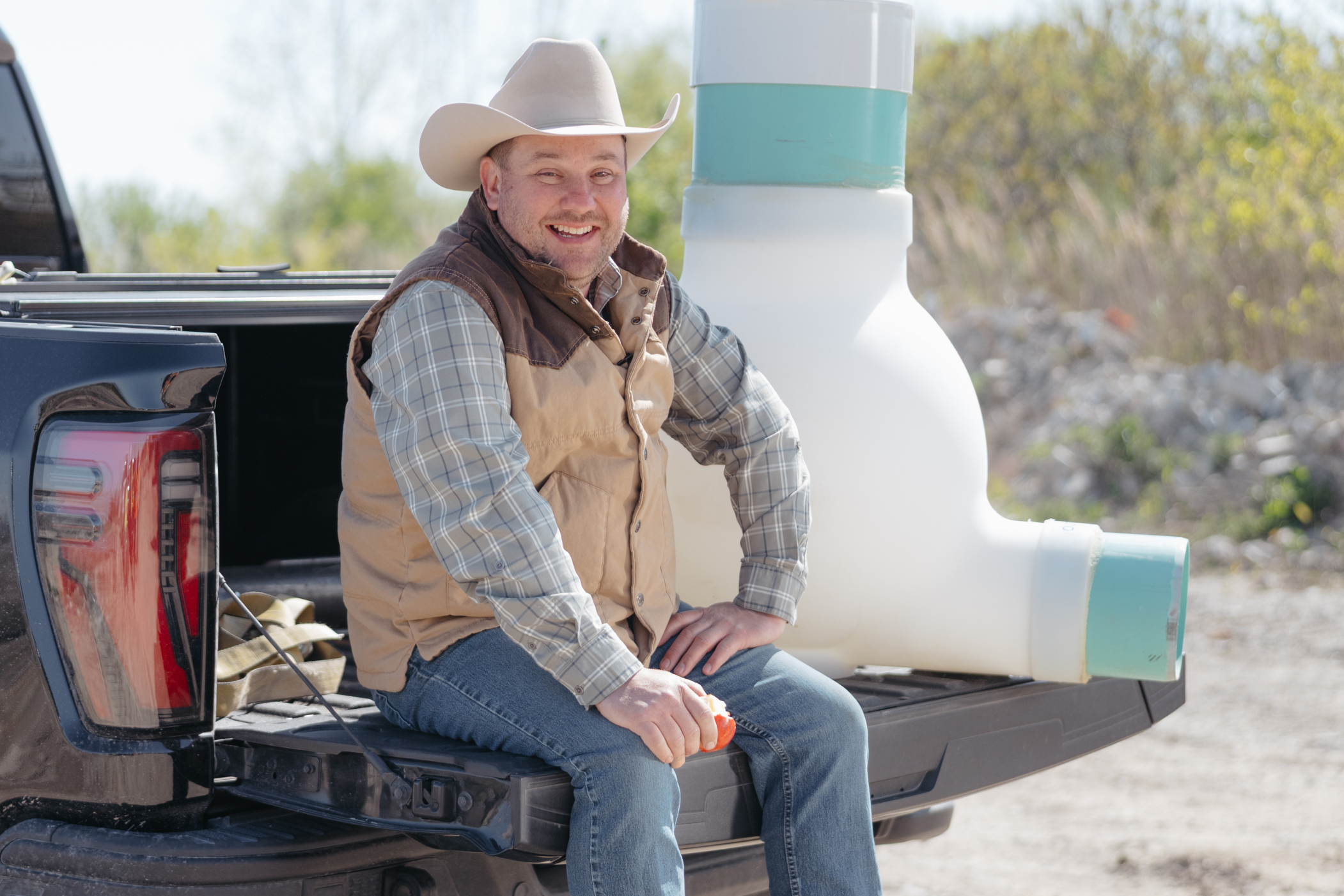
The body of the Poo Pit is 24 inches in diameter. The riser shaft on top is only 12 inches. That difference creates a 6 inch ledge around the entire body, and that ledge is where backfill sits directly on top of the tank, not just around it.
For anyone speccing this against a flotation calculation, that matters. You're not relying on friction against the sidewalls alone. You've got dead load from backfill bearing straight down on the widest part of the structure, which is exactly the kind of resistance you want to see when you're evaluating uplift in a high water table condition.
Install Depth and What It Means for Shallow Sites
Minimum install depth is 43 inches, down to roughly the start of the riser shaft. From there:
- Backfill around and over the body
- Set the concrete riser ring
- Set the cast iron frame and cover
Each of those adds dead load stacked directly above the tank. By the time you've got backfill, the riser ring, and the frame and cover in place, you've got three independent sources of downward force working against buoyancy, not just one. That's what holds it down even in fully surcharged conditions, meaning the soil is as saturated as it'll ever get on that site.
For municipalities dealing with shallow bedrock, high water tables, or lots where a deep install simply isn't an option, that 43 inch minimum combined with this anti-flotation design is exactly why the Poo Pit gets specified in those conditions.
What to Tell Your Inspector
If you get asked about flotation risk on a permit review or a site inspection, the answer is straightforward: the product is engineered with a wide body and narrow riser shaft specifically to create a backfill ledge, and standard install depth with proper backfill and riser components provides sufficient dead load to resist uplift under fully surcharged conditions. That's not a workaround. That's the design intent.
Bottom Line
High groundwater is worth planning for. It affects excavation, dewatering, timing, and material handling. It doesn't affect whether this tank stays put. Spec it, install it to depth, backfill it properly, and move on to the next thing on your punch list.
Questions about a specific site condition? Reach out to the Poo Pit team and they'll walk through it, on camera or off.